
Electrification is a crucial driver in the global energy transition, aiming to lower greenhouse gas emissions and improve energy efficiency by powering transportation, heating, and industrial processes with clean electricity
–
https://www.nationalobserver.com/2026/06/16/opinion/international-energy-geopolitics-iran-war
Excerpted from June 18th 2026 National Observer Max Fawcett article
In the last Cold War, it was easy for Canada to decide which side it backed. This time, it will be far more difficult. Yes, our economy still relies heavily on oil and gas development and it drives a lot of our capital formation and attraction. But China and its allies in Asia are actively re-wiring the global economy
Will the future be forward-looking, green and bravely planetary — or will it be backward-looking, carbon-intensive and stridently sovereigntist?
Countries that import oil and gas — which is to say, almost all of them, especially in the parts of the world where demand is supposed to grow — are re-assessing their reliance on an increasingly unreliable product. And while Canada may look like a comparative source of calm and reliability compared to Iran or even the United States right now, we’re still in the same fundamental business of trying to sell more fossil fuels — one that faces the same existential threat.
China, after all, isn’t building solar panels, batteries, electric vehicles and other demand-destroying technologies because it cares about the environment. It’s capitalizing on a growing source of economic and especially geopolitical power.
THE MATH IS THE MATH
–
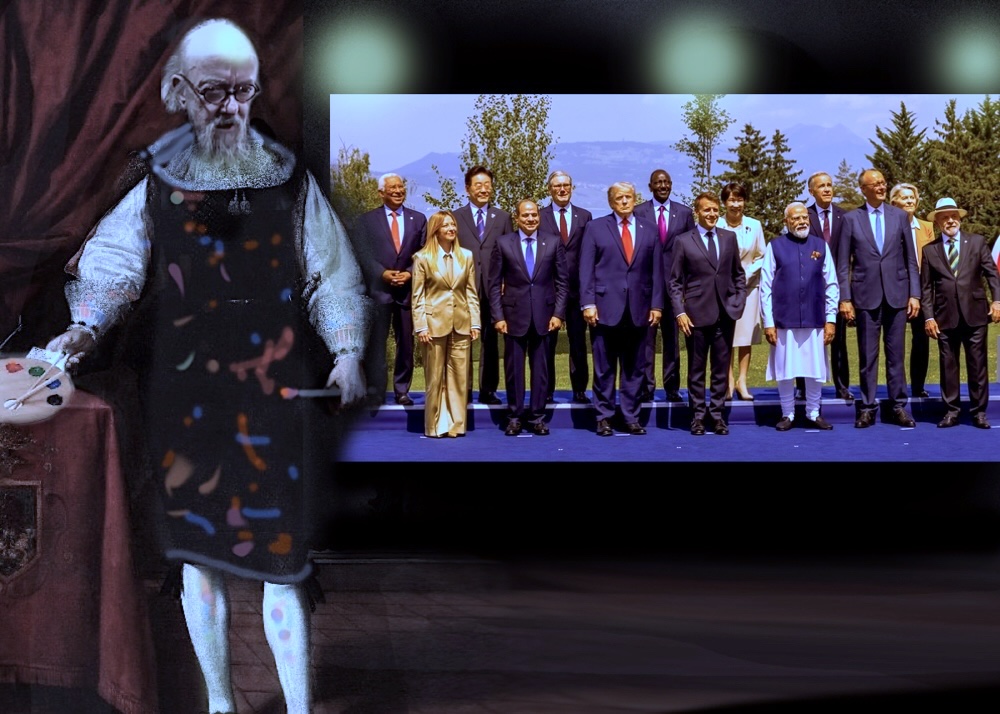
- Meanwhile at the G7 :Political Fossil Fuel Theatre perhaps?
- Canada is poised to become a key and reliable supplier of energy to the G7 after leaders meeting in France embraced this country’s potential to deliver “significant additional capacity” to global markets to reduce dependence on oil and gas coming through the Strait of Hormuz.
- “We commit to accelerate the diversification of energy supply routes in order to reduce global vulnerability to the Strait of Hormuz and to increase our energy stocks,” said a joint statement by G7 leaders in Évian-les-Bains, France, on Wednesday.
- “We welcome the potential for Canada to deliver significant additional capacity to global markets in the coming years.”
Source CBC News
Markham Hislop sits down with National Observer columnist Max Fawcett to examine Mark Carney’s emerging energy and climate strategy, the global shift from molecules to electrons, and why Canada’s assumptions about future oil and LNG demand may be increasingly out of step with reality.