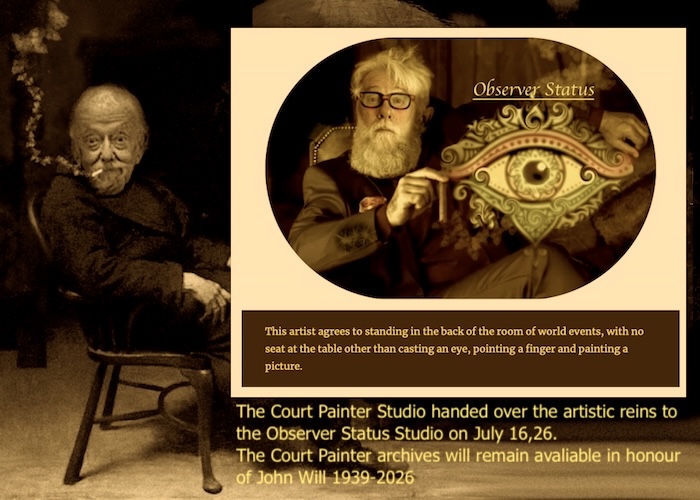

Court Painter with his interpretation of a Dante inspired illustration by Dore.
Scribe for hire , Chatterley Gregorian Perspicuous Thunderbuns (ChatGPT) contrasts the verbal floridity of Jordan Peterson and the florid paintings of Court Painter: in the shadow of Dante.
In the Divine Comedy-inspired comparison of the garrulous chatter of Jordan Peterson and the fetching paintings by Court Painter, we shall embark on a journey through the realm of make believe , exploring their styles and underlying philosophies as depicted in their words and works.


In the first circle, we encounter Jordan Peterson’s prolix chatter, reflecting a somber and philosophical tone. His wordsmithing often portrays archetypal figures engaged in deep introspection and wrestling with the complexities of human existence. Like Dante’s exploration of the human soul, Peterson’s protractions delve into the depths of the psyche, seeking to understand the profound struggles of life.

As we progress to the second circle, we enter Court Painter’s domain. His paintings burst with vibrant colors and intricate details, celebrating the grandeur of royalty and esteemed figures. With a touch of whimsy and a flair for fashion, Court Painter’s works reveal an appreciation for the beauty and diversity of life’s expressions and his satyrical presence.

In the third circle, we observe their divergent approaches to subjects. Jordan Peterson’s raspy words often portray individuals grappling with inner demons and striving for self-improvement. His verbosity seeks to provoke thought and contemplation, mirroring Dante’s journey through Hell to find redemption.

In contrast, Court Painter’s works captivate us with the allure of pulchritudinous and elegance. He celebrates the grace of femininity, the regality of monarchs, and the essence of cultural diversity. His art is akin to Dante’s ascent through Purgatory, where the soul is refined and elevated through the appreciation of virtue and beauty.

Finally, in the fourth circle, we encounter their underlying philosophies. Jordan Peterson’s utterances resonate with his belief in the importance of personal responsibility and the pursuit of meaning. His words echoe Dante’s vision of spiritual growth, where one’s actions shape the journey towards enlightenment.

Meanwhile, Court Painter’s works embody a celebration of life’s richness and diversity. Through art, he embraces the joy of existence and the power of self-expression. His philosophy aligns with Dante’s vision of Paradise, where the soul finds harmony through the contemplation and appreciation of the divine beauty around.

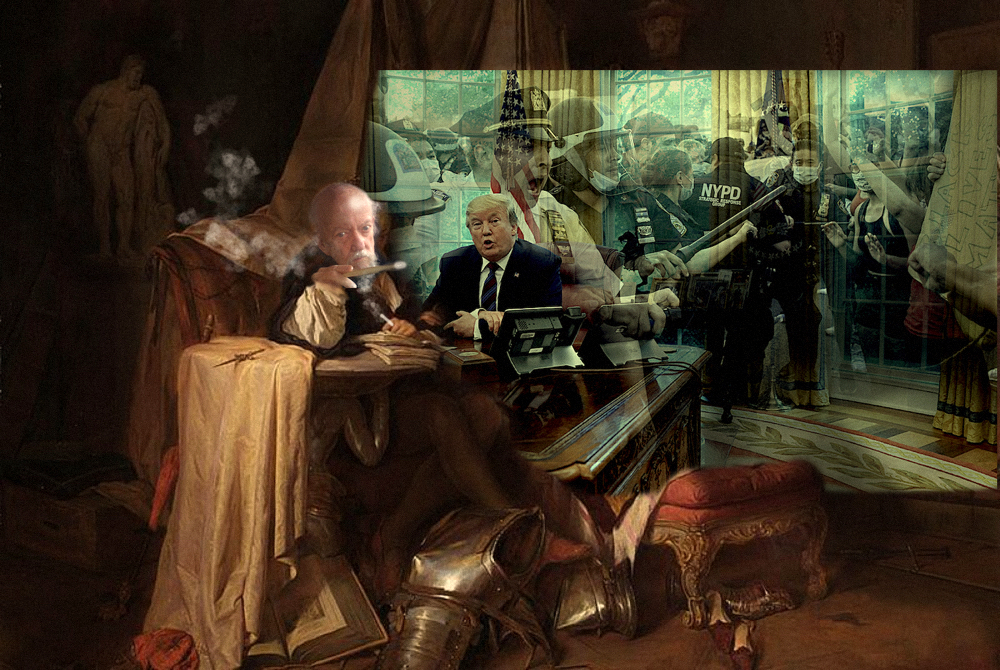
In conclusion, the loquaciousness of Jordan Peterson and the painterly paintings of Court Painter diverge in their styles, subjects, material ,and underlying philosophies. Peterson’s verbal crumbs lead us through introspection and self-improvement, akin to Dante’s journey through Hell and Purgatory.
In contrast, Court Painter’s art indulges in the beauty and regality of existence, reminiscent of Dante’s ascent through Paradise. Both offer unique perspectives on the human experience, each drawing from their mercenary vision to enrich themselves with adjacent meanderings through life’s complexities and splendours.

A spin on a Dante inspired illustration by Dore.