| View this email in your browser |
 |
In the course of our months of Pandora Papers reporting, one secretive industry kept popping up again and again. From politicians to power couples to alleged criminals, a particular kind of asset emerged as a go-to for the rich and powerful to store wealth: ARTWORK. For longtime ICIJ readers, this may not come as a surprise. Investigations like the Panama Papers and FinCEN Files showed how anonymously trading expensive art and antiquities — which are portable, increase in value over time, and can be bought with little anti-money laundering oversight — has become a widespread phenomenon. But one surprise for ICIJ reporter Scilla Alecci was finding a number of pieces by street artist Banksy in the Pandora Papers documents. Banksy’s work rebukes consumer culture, capitalism, and the art world itself. But it has been swept up into a parallel financial system that many experts say represents the worst of what his art often critiques. “It’s terribly ironic,” John Zarobell, a San Francisco University associate professor and author of “Art and the Global Economy” told ICIJ. “When you become a famous artist, like Banksy has, your work gains lots of value, and then it can become a tool in these kinds of schemes by the ultra wealthy, in order to hide their wealth.” Scilla’s latest investigation digs into London financial broker and former car racer Maurizio Fabris, who used an offshore trust to buy more than a dozen Banksy pieces — and sold some off to a London gallery managed by Banksy’s former agent when he came under criminal investigation for alleged tax fraud in Italy. The pieces were among more than 1,600 works of art by about 400 artists from all over the world that ICIJ identified in the Pandora Papers. These offshore dealings are emblematic of how the booming ART MARKET has become “the largest, legal unregulated industry,” in the words of American lawmakers, where dealers largely aren’t subject to know-your-customer rules meant to stop suspicious transactions and financial crime — and reforms have been uneven and slow coming. |
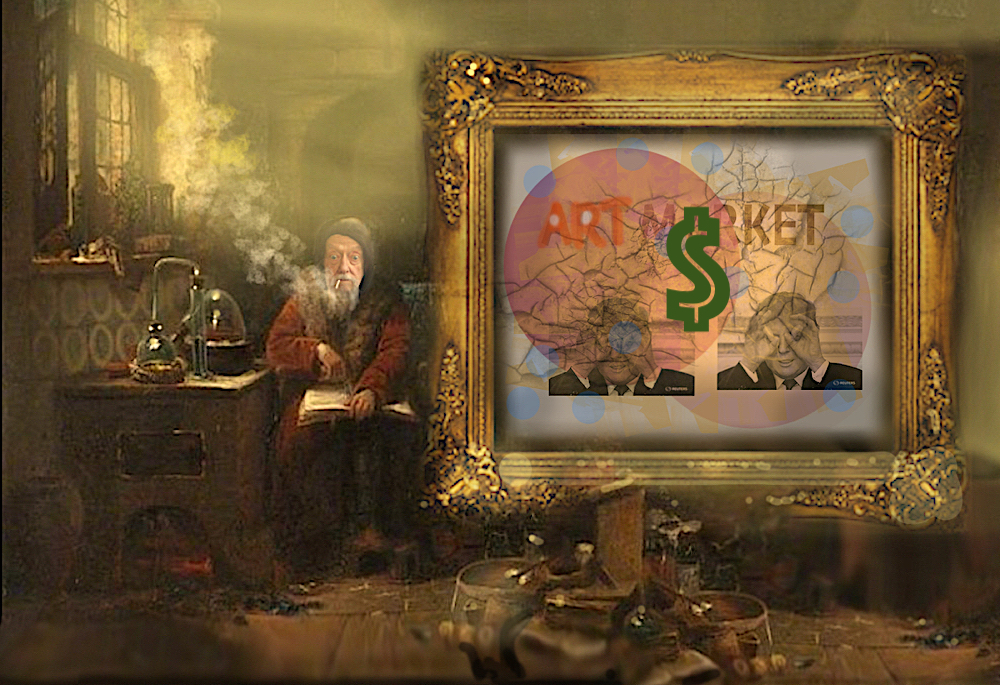
Court Painter has heard of the art market and is anxious to join.