Court Painter, in desperation turned to his studio resident scribe Chatterley Harrumph Acerbic Thunderbuns (ChatGPT) to write something in exaggerated Shakespearean rhyming couplets to match the sentiments of selected sad opinions rendered in the press on November 20/24.
The images were chosen willy nilly from the vast Court Painter archives. Unfortunately no happy pictures could be found in the archive at the time of this posting.
A nation’s honor must not be sold, For “America First” lays a tyrant’s hold.
A deal once gilded, a dream so bright, Now crumbles to dust ‘neath blinded might.
Lo, Trump ascends with chaos unchained, Policies falter, and leaders are stained.
Unity’s beacon must ever shine, For division’s shadow yields ruin’s sign.
Blame is a venom that fouls the air, It blinds the just and breeds despair.
Institutions strong the culture sustain, Their fall would shatter the nation’s vein.
When trust is broken, alliances stray, Should Canada bend or chart its own way?
A climate plan tests wisdom’s creed, The hour is dire; bold actions must lead.
To prepare for doom is prudence’s plea, Neglect begets catastrophe.
A nightmare plays on the stage of might, Where clashing ideals doth darken the light.
A victory hollow, bereft of soul, Without compassion, no leader is whole.
The tides do turn, as power must wane, Trudeau’s bright star begins to wane.
Our waters are sacred, a covenant true, Not sold for gold, nor bartered anew.
Through trials and tears, a nation shall rise, Each struggle a stone ‘neath destiny’s skies.
What of thee, Canada, bold and free? Lost in the haze of complacency.
Ideals adrift, chaos takes sway, Beware the false paths that lead us astray.
When power is tested, truth is revealed, A leader’s resolve must be steeled.
Behold Trudeau, diminished in frame, A shadowed figure in power’s game.
The energy shifts, the balance untamed, Adapt or perish, the challenge proclaimed.
Time’s fleeting grasp must not be ignored, Neglect the ties, and they’ll be no more.
Though tech may twist, ‘tis man must steer, Intent unguarded breeds chaos near.
The stakes are vast, the field is wide, For strategy shapes both time and tide.
Photo-shoot fail: Biden, Trudeau miss traditional photo with world leaders at G2
RIO DE JANEIRO
US President Biden and Canadian Prime Minister Justin Trudeau strolled up after photographers had already taken the official picture, as other world leaders milled about chatting after having smiled and raised linked hands for the photo.
The timing left Chinese President Xi Jinping front and centre among the rows of leaders posed against blue skies and blue water in Rio de Janeiro.
Portrait from previous sitting with the ever on time President Xi.
Biden and Trudeau arrived together at the designated spot for the photo, standing and looking about to join the group photo, a set piece of such summits.
It has been reported that the two were delayed because of previously scheduled portrait sittings with celebrity artist Court Painter who demanded the sitters remain still while finishing the rendering of his political subjects.
Court Painter did not apologize for his delaying of the world leaders photo op ,commentimg that paint takes time to dry and true heritage moments are not produced with a “picture snap!”
Court Painter seen in portrait settings with the diminished and tardy leaders.
Donald the First, future Monarch of the United States of Autocracy
Alberta Premier Danielle Smith will be heading to Washington, D.C., for Donald Trump’s coronation Jan. 20, 2025.
The premier’s office confirmed Smith plans to attend the Canadian Embassy’s coronation event, where she will watch the crowning.
The event will be a gathering of Canadian and American officials who are key to maintaining a strong and constructive relationship by transitioning negotiations from a presidental led republic to a Trump led monarchy.
The premier has also been invited to speak to a group of conservative monarchists working on fossil fuel climate denial policy in the United States.
She will also be using the trip as an opportunity to further build relationships within the Trump monarchy and will be pursuing a number of bilateral meetings and roundtables with all the kings men to advocate for Albertans’ interests with its largest trading partner.
It is expected there will be flurry of announcements soon from other Canadian officals regarding their attendance at the event.
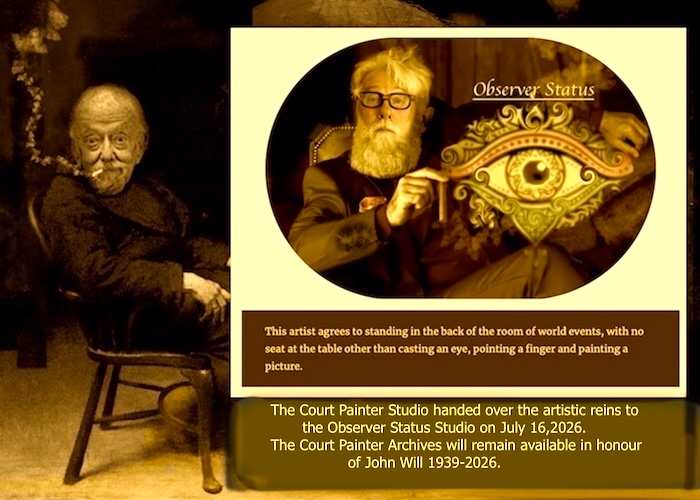
Court Painter has conjured up in his stunning style of olde nouveau realism , memorable images to honour the Premier’s presence at the crowning event.
Premier Smith is expected to bring her favourite prairie dog as a gift to the monarch
Court Painter & portrait of Premier Smith in a less regal setting
If US Attorney General Merrick Garland is asleep at the wheel of justice as lawless authoritarian forces hold democracy by the throat; then arguably AG Garland and his sleep walking of justice may be judged to have contributed as much to the erosion of democratic principles of law and order as Donald Trump and his Republican sycophants.
Painting by the AI robot Ai-Da sells for more than $1m at Sotheby’s . It’s a new record for a work of art created by a robot, the auction house says
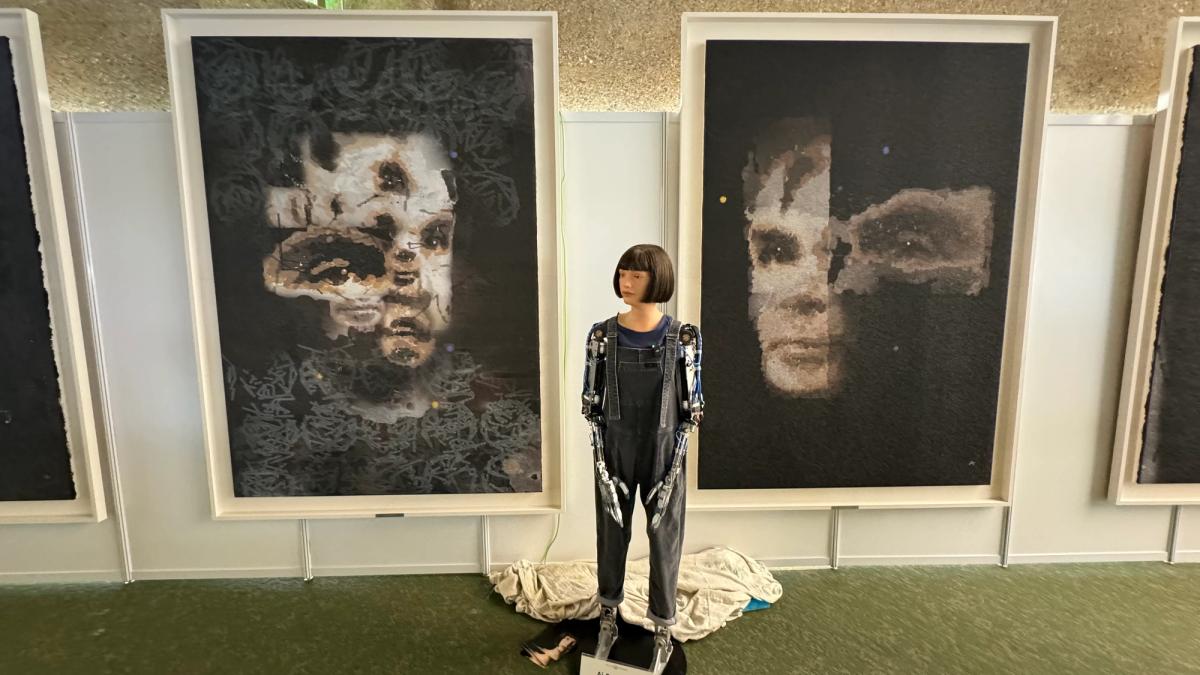
Ai-Da with her paintings at a United Nations event in Geneva. Courtesy Ai-Da Robot Studios
The painting A.I. God. Portrait of Alan Turing (2024) depicts Alan Turing, the English mathematician and Second World War cryptanalyst who is remembered as a pioneer of AI and computer science. The work was displayed earlier this year at a United Nations global summit on AI in Geneva.
Ai-Da Robot was developed by a team led by Oxford gallerist Aidan Meller. Ai-Da is able to paint and draw using cameras in its eyes and robotic arms.
“I do not have subjective experiences; I am dependent on computer programmes … although I’m not alive, I can still create art,” the robot told members of the Communications and Digital committee during a 2022 speech at the House of Lords in the UK.
Court Painter spoke to Ai -Da in private to help explain the difference between his flesh & blood presence and an AI robot by quoting the Bard:
“If you prick us, do we not bleed? if you tickle us, do we not laugh? if you poison us, do we not die? and if you wrong us, shall we not revenge?”
As a gesture of good will across this 21st century divide , Court Painter undertook to breath life into portraits of Ai-Da in his signature natural style.
A Court Painter Explainer:( If needed , an explainer of the explainer is available for a small fee payable in bitcoin)
The Court Painter’s oeuvre of commissioned portraiture materializes a meticulously curated simulacrum of rugged authenticity, deployed within meticulously staged postindustrial contexts that both signify and complicate a performative celebration of blue-collar labor and artisanal craft. His aesthetic trajectory signals a pronounced recalibration of taste away from the artifice of algorithmically generated visual paradigms and toward a valorized, ostensibly “natural” aesthetic. This shift inscribes a reflexive engagement with the knowledge-intensity embedded in the praxes and epistemological frameworks of his subjects, ultimately situating his work within a discursive ethos of authenticity, anti-corporate resistance, and nonprofit ideological alignment.
This week on Prof G Markets, Scott and Ed open the show by discussing the end of the Boeing machinist workers strike, Perplexity’s offer to help the New York Times, and Palantir’s earnings. Then Scott and Ed break down the sectors that they expect will see the biggest gains and losses under the Trump administration. They also discuss which regulators will survive the Trump administration and explain what the market is telling us about the future of housing prices.
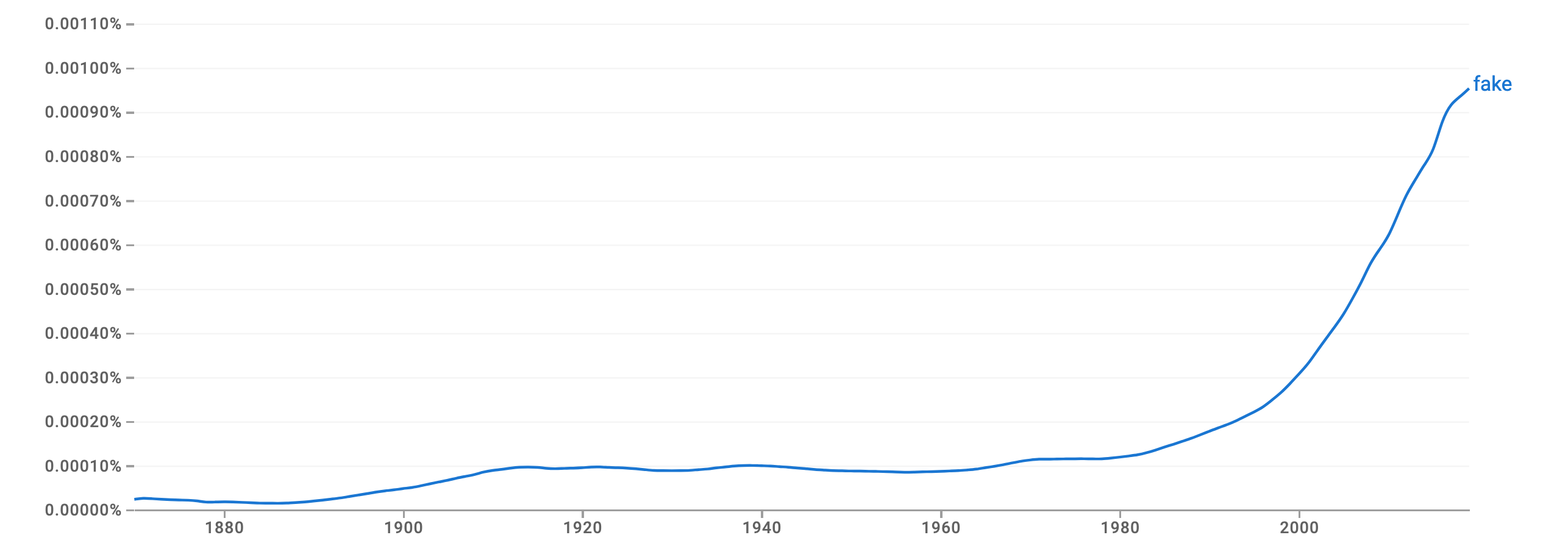
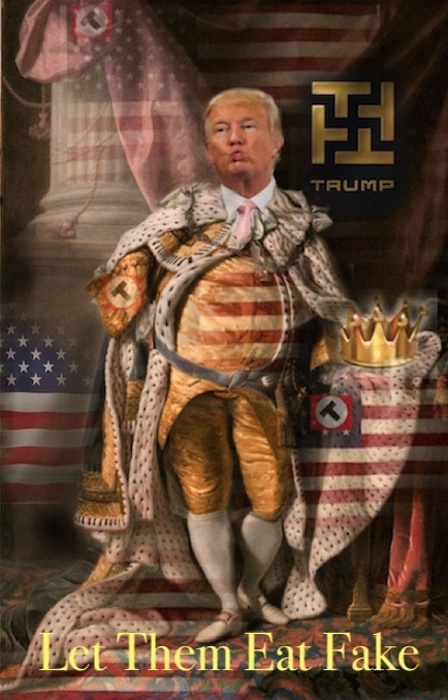
Here’s the Google analysis of the use of the word fake in texts over the last 150 years.
Fake is our leading candidate for word of the century. It captures almost everything relevant now in a single syllable.
Screenshot
You have to give Susan Sontag some credit, the inflection point in accelerating fakeness happened almost exactly when she complained about the collapse in seriousness in the mid-1990s.
Here’s the scariest part of the story: Most of this is by design.
Our culture is now obsessed with deception and misdirection—and it’s not just on the movie screen anymore. You see it everywhere, from cosplay conventions to bands wearing masks to the misguided virtual reality mania.
Lifestyles are increasingly about pretending. Your real self stays in hiding, while your fake self gets presented in the most spectacular way on social media and other digital platforms.
Never before in history has authenticity been in such short supply. That’s so much the case, that the very word authenticity is mocked.
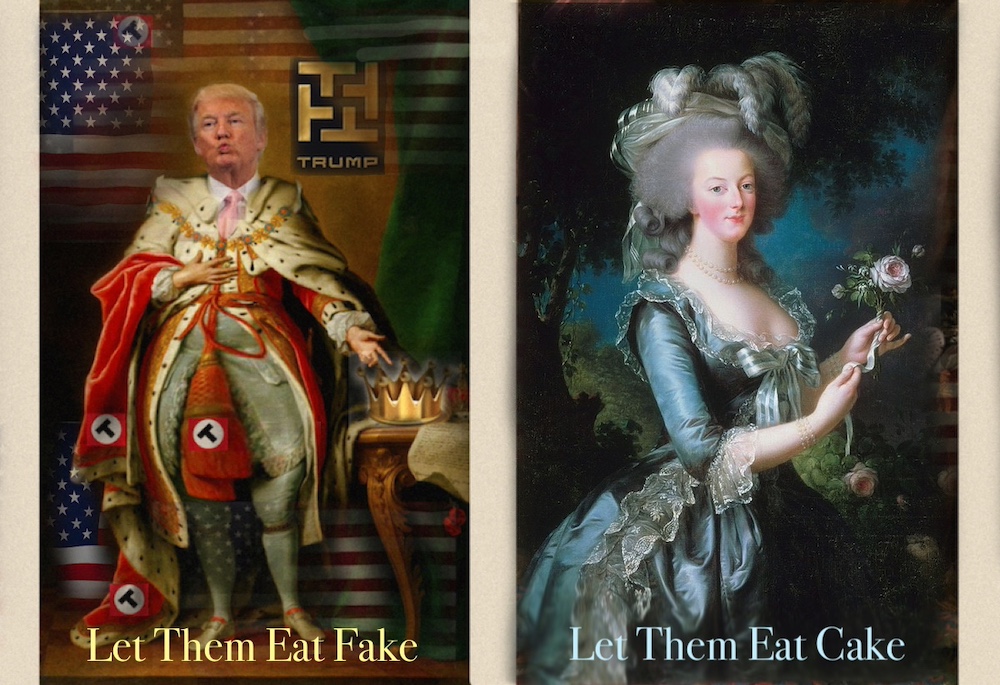
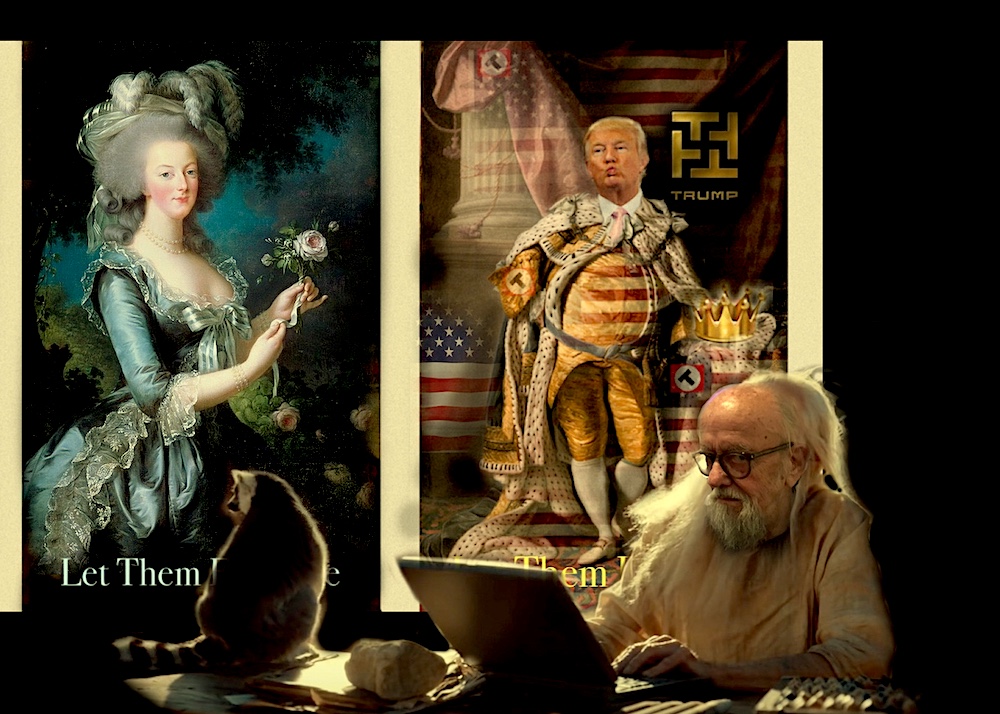
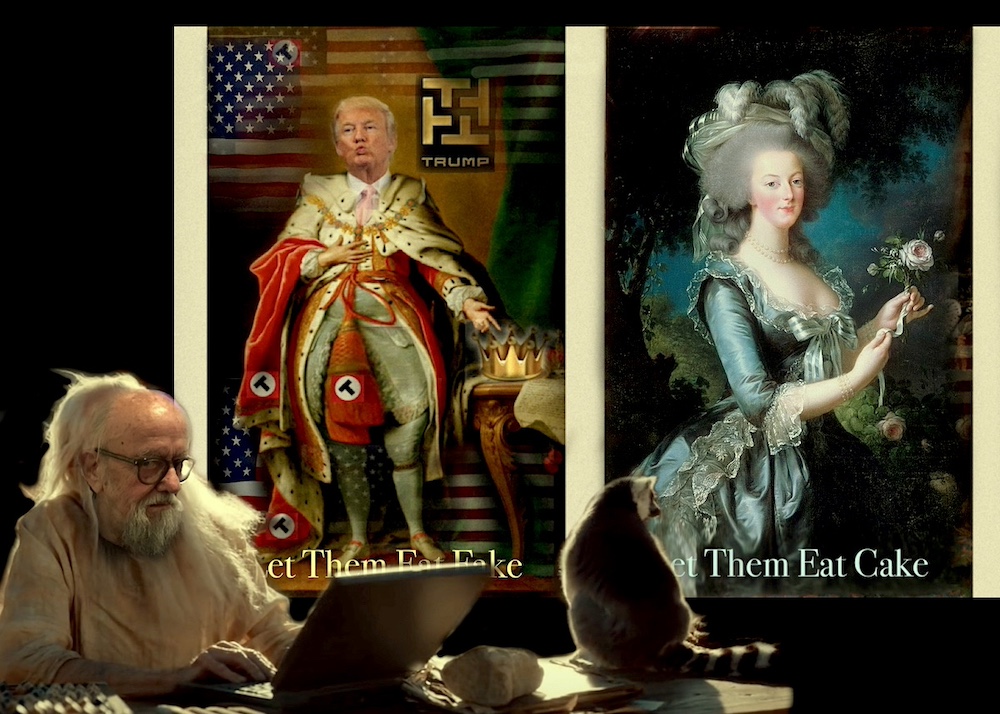
Portrait of Marie-Antoinette by the French painter Élisabeth Louise Vigée Le Brun
Behind the Curtain: The most powerful (unelected) man ever
America just elevated one man to an unfathomable status: the most powerful civilian — ever.
Why it matters:Elon Musk — the most influential backer of President-elect Trump, thanks to his money, time and X factor — now sits at the pinnacle of power in business, government influence and global information (and misinformation) flow.
Higher ambitions: Listen to Musk, and he always circles back to his belief in creating a multi-planetary future. He believes the future of our species is wholly dependent on it.
Well, you get there by controlling space — satellites, space travel and ultimately colonization. He has a virtual global monopoly on satellites and the hottest space company on the globe, Space X — one NASA depends on.
Tucker Carlson interview with Elon Musk on election night describing Trump
MUSK: This is why I posted on X, like, nothing would do more damage to Kamala’s campaign than going on Joe Rogan, because she’d run out of non sequiturs after about 45 minutes.
CARLSON: You can’t hide in three hours!
MUSK: Yeah, like hour two and three would be a complete melted puddle of nonsense. So, it would just be absolute game over. That’s why she didn’t go on. But, on the other hand, Trump, he’s there, there’s no talking points.He’s just being a normal person, having a conversation and doing three hours of Rogan, no problem.
‘Congratulations on history’s greatest comeback!’ That was the breathless response by Israel’s Prime Minister Benjamin Netanyahu to Donald Trump’s second presidential election victory. And Netanyahu knows something about historic comebacks.
Most recently, he made it back to power after a year in opposition while facing a criminal trial and subjecting Israelis to five elections in four years. But his most ‘historic’ comeback has been his political survival, his rehabilitation in the polls and his intensifying centralization of power since presiding over Israel’s greatest calamity, October 7.And Netanyahu made a further move to bolster his single-handed grip on power yesterday, conveniently timed for while America was gripped by the presidential election results. Netanyahu’s firing of Defense Minister Yoav Gallant during wartime, the last gate-keeping adult left in a senior position in the government, was a clear statement of purpose:
Israel’s government solely exists to sustain, protect and defend the prime minister’s political career.
Israel is ruled by a more-than-simply-aspiring autocrat and annexationist touting “total victory” while America will soon be governed by a similarly authoritarian and exclusionist MAGA demagogue.
How these two disastrous leaders’ worldviews and policies will coalesce or conflict will have a fateful impact on Israel, the Palestinians and the wider Middle East – from the wars devastating the region to the nature of the societies that will emerge in their wake.









 Esther Solomon Editor-in-chief, Haaretz English


