the Evergreen industry of warfare…

Please Note: The following article was written & updated before the invasion of Ukraine

Why Is Global Arms Industry Flourishing Despite Covid-19 Pandemic? SIPRI Report Reveals

Outlook article by Deutsche Welle UPDATED: 06 DEC 2021 9:02 AM

(The SIPRI Yearbook is released by the Stockholm International Peace Research Institute (SIPRI) which researches international armament and conflict. The SIPRI “Yearbook 2021” assesses the current state of armaments, disarmament and international security.)
During the Covid-19 pandemic, even though the IMF put global economic contraction at 3.1%, SIPRI researchers saw that the arms sales of these top 100 companies increased nonetheless — they saw an overall increase of 1.3%

A $531-billion business: The new SIPRI report shows that the world’s top 100 arms producers have continued to increase sales — even in the pandemic year of 2020 and despite the global economy contracting.
Lockdowns, crumbling supply chains, jittery consumers: The COVID-19 pandemic has brought about massive economic slumps around the world. One sector, however, has proved immune to the virus: The arms industry. This is confirmed by the latest report on the world’s 100 largest arms manufacturers by the Stockholm International Peace Research Institute (SIPRI).

SIPRI researcher Alexandra Marksteiner told DW that she was especially surprised by the data from 2020, the first year of the pandemic: “Even though the IMF put global economic contraction at 3.1%, we saw that the arms sales of these top 100 companies increased nonetheless — we saw an overall increase of 1.3%.”

The sales of the top 100 arms manufacturers totalled $531 billion (€469 billion) in 2020, more than the economic output of Belgium. Some 54% of this was accounted for by the 41 US companies in SIPRI’s top 100. The main companies in the industry are US-based: Lockheed Martin alone sold more than $58 billion worth of weapons systems last year — a sum bigger than the GDP of Lithuania.

Effective lobbying
Companies that big also wield political power. Markus Bayer, a political scientist at the Bonn International Centre for Conflict Studies (BICC), says arms companies are deliberately exerting influence. He quotes a report by the US NGO Open Secrets: “Defense companies spend millions every year lobbying politicians and donating to their campaigns. In the past two decades, their extensive network of lobbyists and donors have directed $285 million in campaign contributions and $2.5 billion in lobbying spending to influence defense policy.”

And for the arms manufacturing giants, the spending appears to pay off. Alexandra Marksteiner explains that the US Department of Defense provided targeted support for the arms industry during the pandemic. “For example, they made sure that employees of defense companies were largely exempted from stay-at-home orders. On the other hand, there were some orders that were set up so that funds could be transferred to the companies a bit earlier, ahead of schedule, so that they would have a bit of a buffer.”

Big Asian players
Simone Wisotzki has also examined SIPRI’s new figures. An arms control expert at the Peace Research Institute Frankfurt (PRIF), she was especially struck by “the fact that arms companies from the Global South are becoming increasingly important.” Wisotzki mentions India in particular: It has three companies in the top 100, whose combined sales total 1.2% — on a par with South Korea.

However, there are far more weapons leaving the factories of India’s northern neighbor, China. SIPRI has been including Chinese companies in its studies since 2015, despite the many problems with transparency. China’s five companies on the list are benefiting from the Chinese military’s modernization program, and their shipments now account for 13% of the top 100’s sales.

Looking at the Chinese entries, Marksteiner notes that “these companies are capitalizing on what is called military-civilian fusion,” citing the largest Chinese arms conglomerate as an example: “There was a satellite system that NORINCO co-developed, and it makes quite a bit of revenue from that, and it’s used both for military and civilian purposes.”

Militarized information technology
Simone Wisotzki also notes that the boundary between civil and military technologies are becoming increasingly blurred. “Information technology can no longer be separated from weapons technology,” she says. In its new report, SIPRI specifically looks at the growing role tech companies play in the arms business.

Marksteiner emphasizes that, if you want a clear picture of the arms industry, “you can’t just talk about traditional players like Lockheed Martin.” SIPRI says that, in recent years, some Silicon Valley giants like Google, Microsoft and Oracle have sought to deepen their involvement in the arms business and have been rewarded with lucrative contracts.

SIPRI gives the example of a deal between Microsoft and the US Department of Defense worth $22 billion. The company has been contracted to supply the US Army with a type of super-glasses, called the Integrated Visual Augmentation System, which will provide soldiers with real-time strategic information about the battlefield.

The US military’s interest in Silicon Valley is easy to explain. “They realize that, in these new enabling technologies, be it artificial intelligence or machine learning or cloud computing, these Silicon Valley companies’ expertise is far beyond what you would see from traditional arms industry players,” says Marksteiner. “There is a chance that some of these companies will actually end up entering the [SIPRI] top 100.”

Russia is falling behind
Along with France, the biggest drop in arms sales was recorded by Russia. The nine Russian companies on the list sold 6.5% fewer weapons last year than in 2019. The BICC’s Markus Bayer believes this drop, to just 5% of the top 100’s total sales, is directly related to India and China having developed arms factories of their own. Both countries were previously big buyers of Russian armaments.

Bayer cites the example of aircraft carriers. The first Chinese carrier was based on a Soviet-built ship purchased by Beijing in 1998. The Chinese carrier, named Liaoning, came into service in 2012.

A lot has happened since then, says Bayer. “In the last 20 years, China has not just caught up with Russia in terms of aircraft carrier production capabilities, it’s overtaken it. Russia hasn’t put a single aircraft carrier into service in that time. And now India has developed its own carrier as well, based on what was originally Soviet technology.”

Where does Europe stand?
The European arms industry has a combined 21% of the top 100’s sales on its books. In 2020, the 26 European companies listed sold $109 billion worth of weapons. The four wholly German arms companies accounted for just under $9 billion of this total.

There are also trans-European companies like Airbus, which handled arms deals worth almost €12 billion — 5% more than in 2019. Europe is increasingly relying on joint ventures like these. Markus Bayer explains: “Europe is now trying, by political means, to expedite such cooperative ventures for the development of a ‘Next Generation Weapon System,’ the ‘Future Combat Air System,’ or the ‘Main Ground Combat System,’ so it can bear the high development costs for new systems like these.”

These joint productions certainly make sense from a cost point of view. But as far as arms export control is concerned, they can often be problematic, says Simone Wisotzki. Referring to the Eurofighter Typhoon, a fighter jet developed by Germany, Britain, Italy and Spain, the PRIF analyst comments that “it is also specifically supplied to problematic third countries, such as Saudi Arabia, which is still waging war in Yemen.” National export regulations are often not applied to joint productions — and it seems that Europe is still a long way from implementing effective joint controls on arms exports.

This article was translated from German

they did what !?…

The federal Liberals have agreed to prioritize specific policy issues backed by the New Democrats in exchange for their support keeping the government in power until 2025.

Both sides have agreed to allow “healthy debate” in Parliament while constantly communicating, including in quarterly leaders’ meetings and monthly “take-stock” meetings, to ensure they stay on the same page. The parties are free to walk away from the agreement if commitments aren’t met.

Measures the two sides have promised to advance: Health Care, Housing & Affordability, Climate Change , Sick Leave, Reconciliation, Tax Fairness, Electoral Participation

Source CTV News

  • Is it any wonder Conservative Interim Leader Candice Bergen and MP Pierre Poilievre are rage steaming!

Auntie Janet kicks ass…

Gidimt’en elder Janet Williams

1:35 AM · Mar 11, 2022·

Click link above for video


Gidimt’en Checkpoint@Gidimten

“RCMP have been entering our village several times each day to harass, surveil, intimidate, and threaten our guests. When police came to her home at 4am, March 10. Auntie Janet confronted the officers and kicked them out of our camp.”

Court Painter images based on screen grabs enhanced from the video

Court Painter relaxes after completing painting of Auntie Janet

Running down the clock…

Updated on October 4,2022 from posts of March 1 and 12 of 2022.

Founded in 1945 by Albert Einstein and University of Chicago scientists who helped develop the first atomic weapons in the Manhattan Project, the Bulletin of the Atomic Scientists created the Doomsday Clock two years later, using the imagery of apocalypse (midnight) and the contemporary idiom of nuclear explosion (countdown to zero) to convey threats to humanity and the planet. The Doomsday Clock is set every year by the Bulletin’s Science and Security Board in consultation with its Board of Sponsors, which includes 11 Nobel laureates. The Clock has become a universally recognized indicator of the world’s vulnerability to catastrophe from nuclear weapons, climate change, and disruptive technologies in other domains. In March 2022, the Science and Security Board released a new statement in the wake of Russia’s invasion of Ukraine.

Infamy Portraits …

in·fa·my/ˈinfəmē/noun

1. the state of being well known for some bad quality or deed.

 2. evil reputation brought about by something grossly criminal, shocking, or brutal. 2a : an extreme and publicly known criminal or evil act. b : the state of being infamous. 

Vladimir Vladimirovich Putin is a Russian politician and former intelligence officer who is the president of Russia, a position he has filled since 2012, and previously from 1999 until 2008.

Rock’ em Sock ’em Right Here Right Now…

With the ousting of Conservative leader Erin O’Toole, speculation on new leadership possibilities are running rampant across the Great Dominion.

A source familiar with the situation has confirmed that Rock ’em Sock ’em Don Cherry and  Right Here Right Now Stephen Harper are joining forces to run as the 21 century Conservative tag team leadership duo!

The obvious choice to juice up the lagging Conservative fortunes is to seriously consider an out of work senior, a man beloved for his proud Canada first reputation …the straight shootin’ right winger for the home team his entire pontificating career and a former PM who is a partner at a firm that includes some of the world’s top former intelligence executives.

Cherry & Harper reportedly teaming up , were quoted as saying “the Conservative Party of Canada is “divided” and we will provide a “national split vision” to defeat Prime Minister Justin Trudeau’s Liberals in the next election.”

Talking in unison ,they went on to rant that the Conservative Party has a responsibility to the Great Dominion and to Canadians to be a national double think political party led by a national double vision…”think Tweedledee & Tweedeldum, Laurel & Hardy, ​Diego and Frida, ​Bert and Ernie, John & Yoko… we offer a national alternative, a national split vision of and for the country.”(They apologized for not having any Canadian examples)

The party is divided and they proclaim they want to keep it that way. Cherry provides the media savvy eye candy & Harper, the wonkiness of a race to the bottom policy strategist plus being a recent addition to an ex-spymasters company investing in Israeli security tech.

Court Painter seen putting the finishing touches on a painting that featured Grapes with his enabler in a  previous life!

Court Painter seen grabbing 40 winks after finishing the tag team painting

Steve was in Saudi Arabia during this publicity shoot so Grapes went solo.

Oligarchy,the stinking rich…

The US announced stronger sanctions on Russia targeting oligarchs. Robert Reich talks about Russian oligarchs’ influence vs. that of U.S. oligarchs also known as Uber billionaires and the stinking rich.

After years of stagnant wages, volatile job markets, and an unwillingness by those in power to deal with profound threats such as climate change, there is a mounting sense that the system is fixed, serving only those select few with enough money to secure a controlling stake. Robert B. Reich shows how wealth and power have interacted to install an elite oligarchy, eviscerate the middle class, and undermine democracy. Reich exposes how those at the top propagate myths about meritocracy, national competitiveness, corporate social responsibility, and the free market to distract most Americans from their accumulation of extraordinary wealth, and power over the system. Instead of answering the call to civic duty, they have chosen to uphold self-serving policies that line their own pockets and benefit their bottom line.

Source: Edited Description to Robert Reich’s recent book The System: Who Rigged It, How We Fix It.

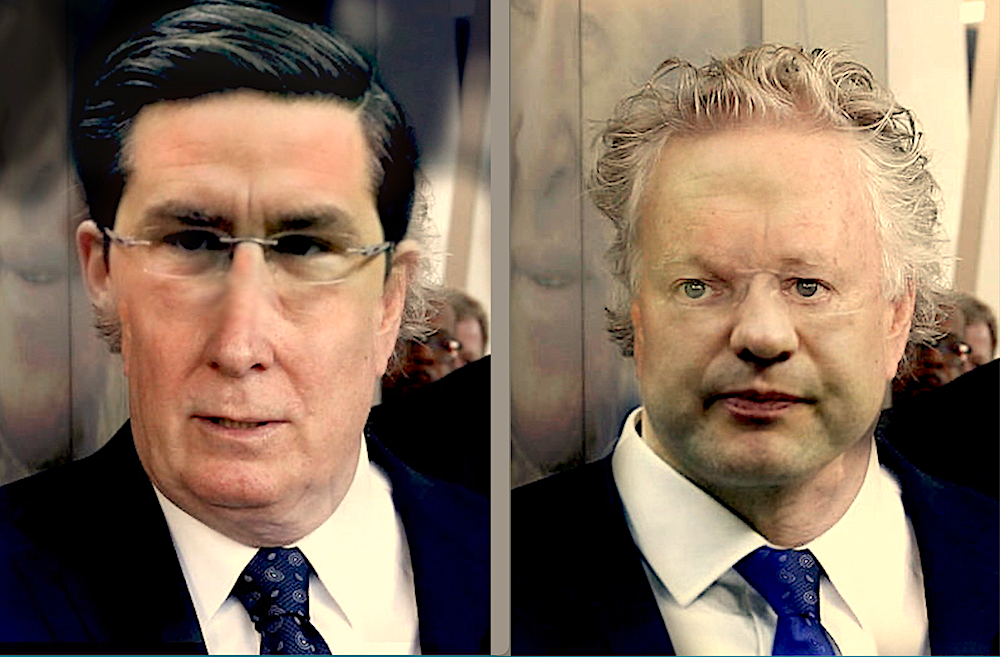
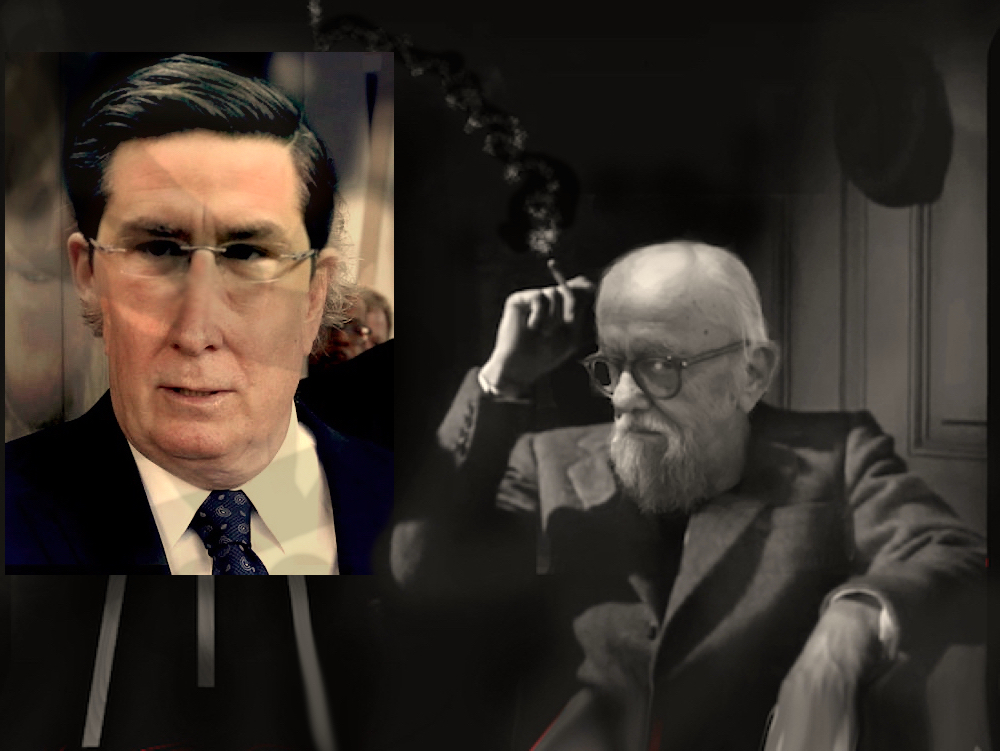
To avoid lawsuits Court Painter & Press Attache AHM, have staged how they consider oligarchs are likely to present themselves in various elite settings.I think we will have to agree they look born to the status!

Globally, the number of stinking-rich is projected to increase a staggering 28% by 2026. (Still, it’s worth noting that growth between 2016-2021 was almost three times this rate, at over 75%.)

Despite the spread of democracy in the 20th century, oligarchies continued to exist, including in countries that were nominally democratic in form. Among industrialized countries that have been identified as oligarchies are Russia since the fall of the Soviet Union and China since that country’s embrace of capitalism in the late 1970s. Some political scientists have argued that the contemporary United States is an oligarchy or a plutocracy, because its great inequality of wealth and income (as compared with other industrialized countries) enables economic elites and corporations to influence public policy to their advantage, often against the preferences of the majority of ordinary citizens.

Source: Encyclopaedia Britannica

As an aside…pay awarded to the CEOs of Canada’s five largest banks rose by 23 per cent last year, the Globe reports. Five bank CEOs earned a combined $70-million in total compensation, compared with $57-million in 2020, according to company filings.

Encyclopedia Britannica

In celebration…

As a modest contribution to celebrate International Women’s Day, a selection of women featured in past Court Painter posts

Mary Simon, First Inuk Governor General
Toni Morrison, Black Writer
Aliqa Nanangnak Illauq, Inuk Activist
Mary Shannon Will, Artist
Mumilaaq Qaqqaq, Inuk Activist
El Jones Poet & Activist
Judy Wilson-Raybould, Indigenous Politician
Chrystia Freeland, Politician
Chrystia Freeland, Deputy Prime Minister & Minister of Finance
Alexandria Ocasio Cortez, Politician
Cindy Blackstock , Indigenous activist
Cindy Blackstock, Lawyer & Indigenous activist
Pam Palmater, Indigenous activist
Laakkuluk Williamson Bathory, Indigenous artist
Zexi Li, Citizen activist

Greta Thunberg, Environmental activist
Pam Palmater, Lawyer & Indigenous activist
El Jones, Black activist
Jane Philpott & Judy Wilson Raybould
Jane Philpott, Medical Doctor & former MP

of pomp & pulchritude…

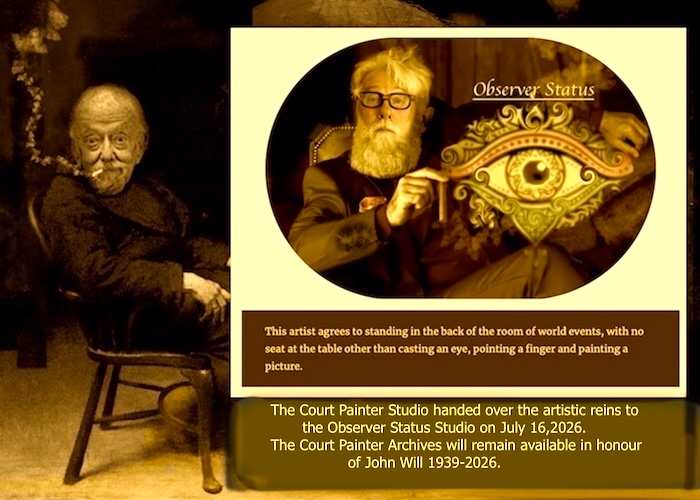
How Court Painter spends his days as the Great Dominion’s premier portraitist of pomp & pulchritude.

Editors note: Because of technical difficulties, images were not made available to correspond with the narrative of the story however a selection of past gems will perhaps delight the eye and avoid complaints.

Court Painter’s favourite spot for power breakfasts is an unremarkable Tim Hortons next to  a drone airport and tattoo parlour. He makes meeting oil executives secretaries and their political friends a priority, typically keeps his evenings open for holding court at the Ship & Anchor and travels outside the Calgary area about three times a month to avoid by law enforcement regulations.

Court Painter does not as a rule release itineraries detailing how he spends his days, but eight months of his calendars obtained by the Sun’s Dinger Bell  through Freedom of Information (FOI) requests provides a window into how he uses his time and who has his ear and fills his bottomless wine cup.

According to Court Painter’s schedules, his formal work day in the studio typically begins just before 9 a.m. with a call-in briefing on sales and future commissions and ends by 5 p.m. In between, Court Painter usually has five to 10 appointments, including interviews with unpaid studio interns, answering ham radio calls and attending wine events . On average, he has an evening engagement 7 days a week at the Ship & Anchor and is on the road three times a month avoiding the sheriff with court summons. Other than his daily briefing, about half of his Fridays have limited or no appointments except for the Ship & Anchor . He has a few events on about half of his Saturdays and Sundays including the Ship & Anchor.

Asked about Court Painter’s schedule, Press Attache A Hardon MacKay said his calendar does not reflect his full workload. “Court Painter is one of the most accessible and hard-working artful creative and imaginative elites in the country and is often working late into the night returning phone calls from angry Alberta hobby painters and technique challenged oil patch heavy equipment operator water colourists while also seeking a bit of well earned down time at the Ship & Anchor.”

Court Painter has also Zoomed with former prime minister Jean Chrétien to discuss the Shawinigan handshake but his favourite is with Jordan Peterson and their heated but good natured discussion about lobsters and the traps they often fall into.